
8 October 2026
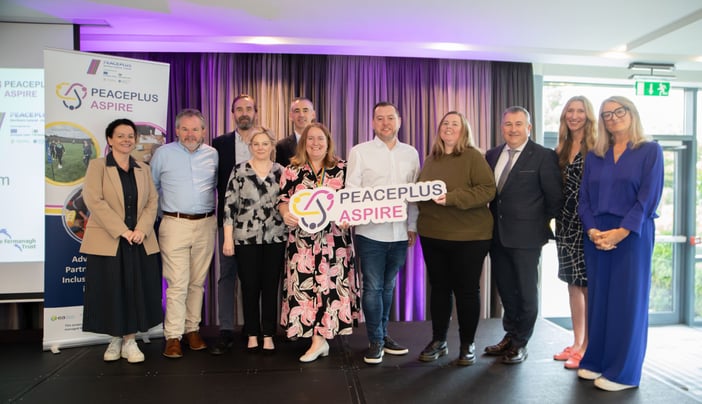
On 8 October, educators, policymakers, researchers, community representatives and young people gathered in Dundalk for the PEACEPLUS ASPIRE Symposium: Looking Out for Peace. The event provided a platform for reflection, dialogue and collaboration, examining the evolving role of shared education in fostering understanding, strengthening relationships and supporting more cohesive communities across Northern Ireland and the border counties.
Building on the success of the PEACEPLUS ASPIRE Good Relations Symposium in October 2025, which explored the theme of Connect in shared education, the 2026 symposium looked to the future of shared education and its contribution to peacebuilding and reconciliation. With a particular focus on how relationships fostered through shared education can strengthen communities, the event also explored ways to empower young people as active participants in building a more peaceful and inclusive society.
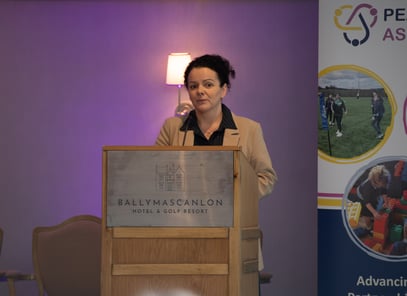
The day began with a welcome from Emma Grainger, Executive Director at Léargas, who reflected on the importance of building genuine connections, being intentional about where we focus our attention, and creating opportunities for meaningful engagement. She highlighted the role of PEACEPLUS ASPIRE and shared education in fostering environments where children and young people can flourish, develop positive relationships and reach their full potential. She said:
That is why programmes such as PEACEPLUS ASPIRE are so important. They create spaces for connection and mutual understanding. They create opportunities to meet the person behind the label. To ask questions. To build relationships over time. That is why the people and work represented in this room are so important.
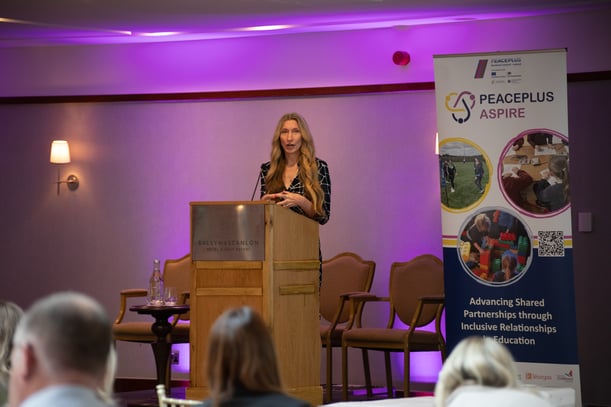 Our keynote speaker, Dr Laura K Taylor (PHD), a Professor in the School of Psychology at University College Dublin and Principal Investigator of the Helping Kids! Lab, explored the positive role children and young people can play in building peace. Her research integrates developmental psychology with peace studies to examine social inclusion among children and youth in conflict-affected settings.
Her presentation introduced the Developmental Peacebuilding Model (DPM), developed by Dr Taylor, which explores how children and young people can help foster better relationships between groups that are divided by conflict through their actions and interactions. The session also considered the implications of the DPM for future research, educational practice, and policy aimed at strengthening peacebuilding and social cohesion.
The symposium also showcased excellent work undertaken by partnerships supported by PEACEPLUS ASPIRE within early years settings, primary and post-primary schools across Northern Ireland and the border counties of Ireland. Interactive elements, including roundtable discussions around the future of shared education and a series of community connector stalls, provided opportunities for networking, discussion and reflection throughout the day.
In the afternoon session, participants took part in a series of interactive workshops focused on key themes relating to peacebuilding, inclusion, and future collaboration. Workshops explored opportunities for schools and organisations to engage in cross-border projects through Erasmus+, strategies for responding to anti-migrant incidents and intimidation in communities, and resources to help educators use values-based approaches to understand and address division in society. A dedicated early years session highlighted the importance of creating inclusive environments that promote diversity, belonging and positive relationships from the earliest stages of a child's education.
We were delighted to welcome Hope and Courage Collective, Social Change Initiative, Olympic Handball Ireland, Erasmus+, and eTwinning as community connector stalls at the event. They provided teachers and attendees with the opportunity to connect directly with key supports and explore a wide range of resources and services available to schools. The networking element of the event enabled educators to build new relationships and strengthen early years and school partnerships across the region.
It was a wonderful day of discussion and reflection on the future of shared education and its wider societal impact. Through expert research from Dr Laura K. Taylor, valuable youth perspectives, roundtable discussions and practical workshops, the symposium created an opportunity for meaningful dialogue on the future of shared education and its role in strengthening relationships, supporting peacebuilding, and building more cohesive and connected communities. The insights, experiences and contributions shared throughout the day helped make the symposium a valuable and thought-provoking event.
Take a look at some highlights from the day below:
PEACEPLUS ASPIRE (Advancing Shared Partnerships through Inclusive Relationships in Education) is a collaboration between Léargas, the Education Authority (lead partner), Early Years- the organisation for young children, National Childhood Network (NCN) and the Fermanagh Trust. The project is supported by PEACEPLUS, a programme managed by the Special EU Programmes Body (SEUPB). It aims to provide direct and sustained contact between children and young people from all backgrounds.
To learn more about PEACEPLUS ASPIRE, check out our website here.
